Accounts Payable Management for Small Businesses: Control Cash Flow and Vendor Payments
Paying bills is more than an administrative task. Accounts payable management
helps small businesses understand upcoming obligations, control payment timing
and protect available cash.
Ledger Pro combines accurate bookkeeping with practical financial review to
help business owners monitor vendor balances, payment deadlines and the effect
accounts payable has on working capital.
Good accounts payable management protects cash flow.
Knowing what is due, when it is due and which payments require priority helps
prevent surprises and supports better financial decisions.
What Is Accounts Payable Management?
Accounts payable management is the process of recording, reviewing and paying
amounts owed to vendors and other suppliers. It includes monitoring outstanding
bills, payment terms, due dates, vendor balances and upcoming cash requirements.
For broader financial management guidance, see
Ledger Pro small business advisory services.
Why Accounts Payable Management Matters
- Maintain visibility over upcoming vendor payments.
- Protect available cash and working capital.
- Avoid unnecessary late fees and penalties.
- Reduce the risk of duplicate payments.
- Identify unusual or unexpected vendor balances.
- Support more reliable cash flow forecasting.
- Maintain stronger vendor relationships.
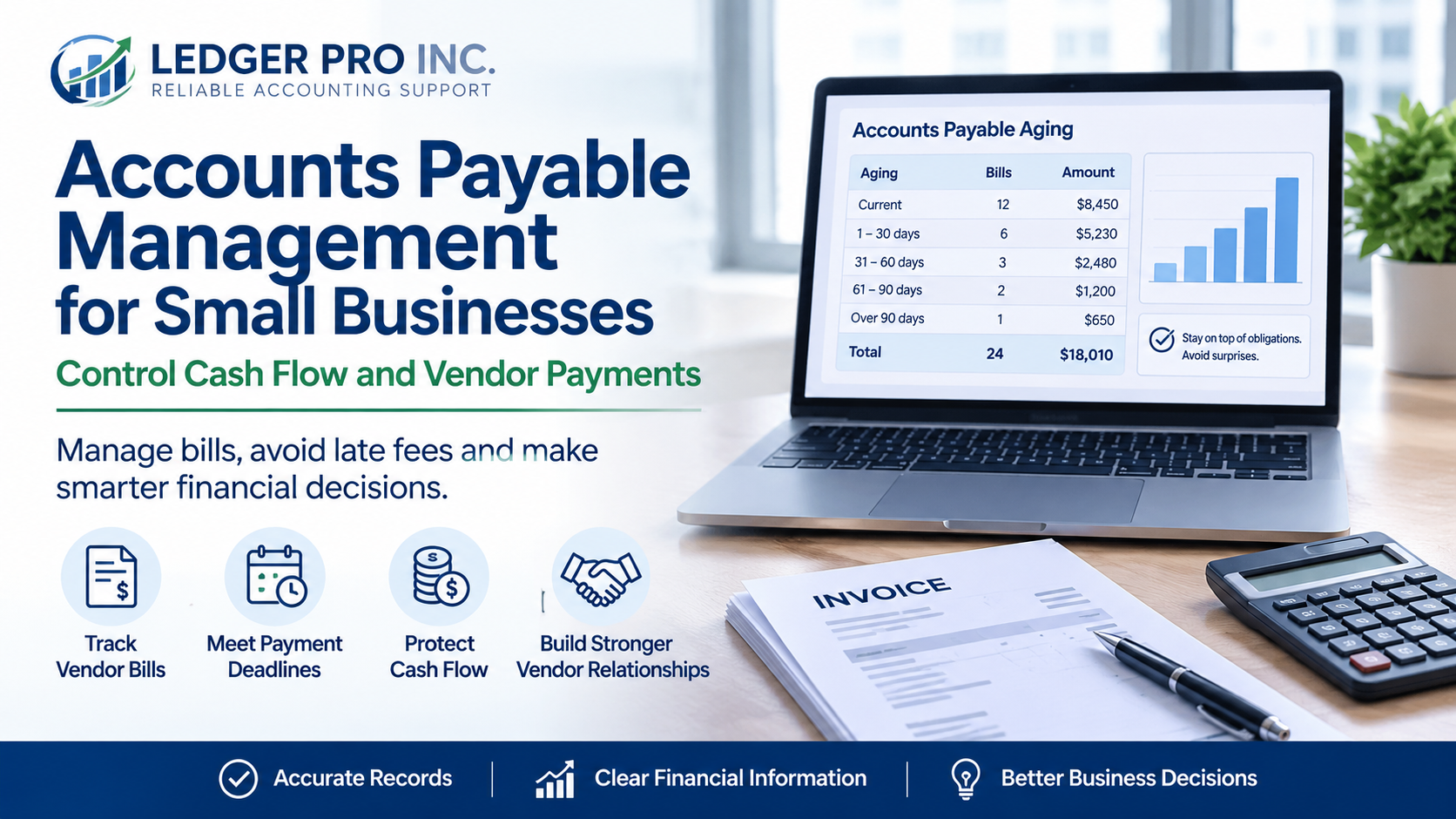
Review the Accounts Payable Aging Report
The accounts payable aging report helps you understand how much your business
owes and when those obligations are becoming due.
- Current: Bills that have not yet reached their due date.
- 1 to 30 days: Recently overdue obligations.
- 31 to 60 days: Older balances requiring attention.
- 61 to 90 days: Significantly overdue vendor balances.
- Over 90 days: Old obligations requiring immediate review.
Practical tip:
Review your accounts payable aging together with current bank balances and
expected customer collections. This provides a better view of upcoming cash pressure.
Watch for Accounts Payable Warning Signs
- Vendor balances increasing faster than normal.
- Frequent late payments.
- Duplicate bills or duplicate payments.
- Old balances remaining unresolved.
- Unexpected credit balances.
- Vendor statements not agreeing with accounting records.
- Large payments becoming due at the same time.
- Payments being made without adequate supporting documentation.
Plan Vendor Payments Around Cash Availability
Paying every bill immediately is not always the best use of working capital.
Payment timing should consider due dates, vendor terms, available cash and other
business obligations.
- Identify bills approaching their due dates.
- Prioritize essential suppliers and operating expenses.
- Review available bank balances.
- Consider expected customer collections.
- Account for payroll, taxes and debt payments.
- Use available vendor payment terms appropriately.
- Preserve adequate cash for unexpected requirements.
Accounts Payable and Cash Flow
Accounts payable is closely connected with cash flow. A business may appear
profitable while facing significant short-term payment obligations.
Review
Cash Flow Advisory for Small Businesses
for guidance on forecasting cash inflows, obligations and working capital requirements.
Include Payables in Your Monthly Financial Review
Accounts payable should be reviewed as part of your regular financial reporting
process. Month-to-month comparisons help identify whether unpaid obligations are
growing and whether vendor payment patterns are changing.
See
Monthly Financial Review for Small Business
for the broader financial reports and indicators business owners should monitor.
Avoid Duplicate and Incorrect Payments
Weak accounts payable controls can result in duplicate bills, incorrect payment
amounts and payments to the wrong vendor.
- Enter each vendor bill only once.
- Use consistent vendor names.
- Review invoice numbers for duplicates.
- Confirm payment amounts before release.
- Apply vendor credits correctly.
- Reconcile vendor statements where appropriate.
- Review unusual transactions before payment.
Payables Affect Profitability Too
Accounts payable primarily affects cash timing, but the underlying expenses also
affect profitability. Rising supplier costs, operating expenses or financing costs
may place pressure on margins even before bills are paid.
Learn more in
Profitability Analysis for Small Businesses.
Coordinate Receivables and Payables
Managing money coming into the business and money going out should not occur
separately. Customer collection timing influences your ability to meet vendor
obligations without creating unnecessary cash pressure.
See
Accounts Receivable Management for Small Businesses
for guidance on collections, aging and overdue customer balances.
How Often Should Accounts Payable Be Reviewed?
- Weekly: Useful for businesses with frequent vendor payments or tight cash flow.
- Monthly: Appropriate for reviewing aging trends and reconciling vendor activity.
- Before major payments: Review available cash and upcoming obligations before releasing significant payments.
Practical tip:
Do not wait until bills become overdue. Regular review gives you more time to
manage payment timing and address cash shortfalls.
Which Ledger Pro Service Level Fits Your Business?
The level of support should reflect how much accounting work your business
handles internally and how much financial oversight you need.
- Routine accounting support: Accurate bill recording, reconciliations and vendor records.
- Accounting plus review: Periodic payable aging review and payment trend analysis.
- Advisory support: Cash planning, working capital analysis and ongoing financial guidance.
View Ledger Pro Plans & Pricing
What You Get With Ledger Pro
- Experienced accounting support.
- Review of vendor balances and payment activity.
- Identification of overdue or unusual payable balances.
- Review of upcoming financial obligations.
- Support connecting payables with cash flow planning.
- Clear financial information for management decisions.
Start With Reliable QuickBooks Information
Accounts payable reports depend on accurate accounting records. Duplicate bills,
unapplied vendor credits, old balances or incorrectly recorded payments can distort
the information you rely on.
Ledger Pro's QuickBooks review process helps identify areas requiring attention
before relying on your accounts payable reports for management decisions.
View the QBO Client Review Benchmark
Turn Payables Into Better Cash Planning
Strong accounts payable management gives you a clearer picture of upcoming cash
requirements. With accurate records and regular review, vendor obligations become
part of a structured cash planning process rather than unexpected demands on your
bank balance.
Need help reviewing your accounts payable?
Ledger Pro provides remote accounting and advisory support designed around the
financial needs of small businesses and organizations.
Contact Ledger Pro
Frequently Asked Questions
What is accounts payable?
Accounts payable represents amounts your business owes to vendors and suppliers
for goods or services already received but not yet paid.
How often should accounts payable be reviewed?
Many businesses benefit from weekly monitoring of upcoming payments and a more
detailed monthly aging review.
Why is accounts payable important for cash flow?
Accounts payable identifies future cash obligations. Knowing when payments are
due helps management compare available cash with upcoming requirements.
What causes inaccurate accounts payable reports?
Common causes include duplicate bills, missing vendor credits, incorrectly
recorded payments, old balances and unreconciled accounting records.