Cash Flow Advisory for Small Businesses: How to Stay Ahead of Problems
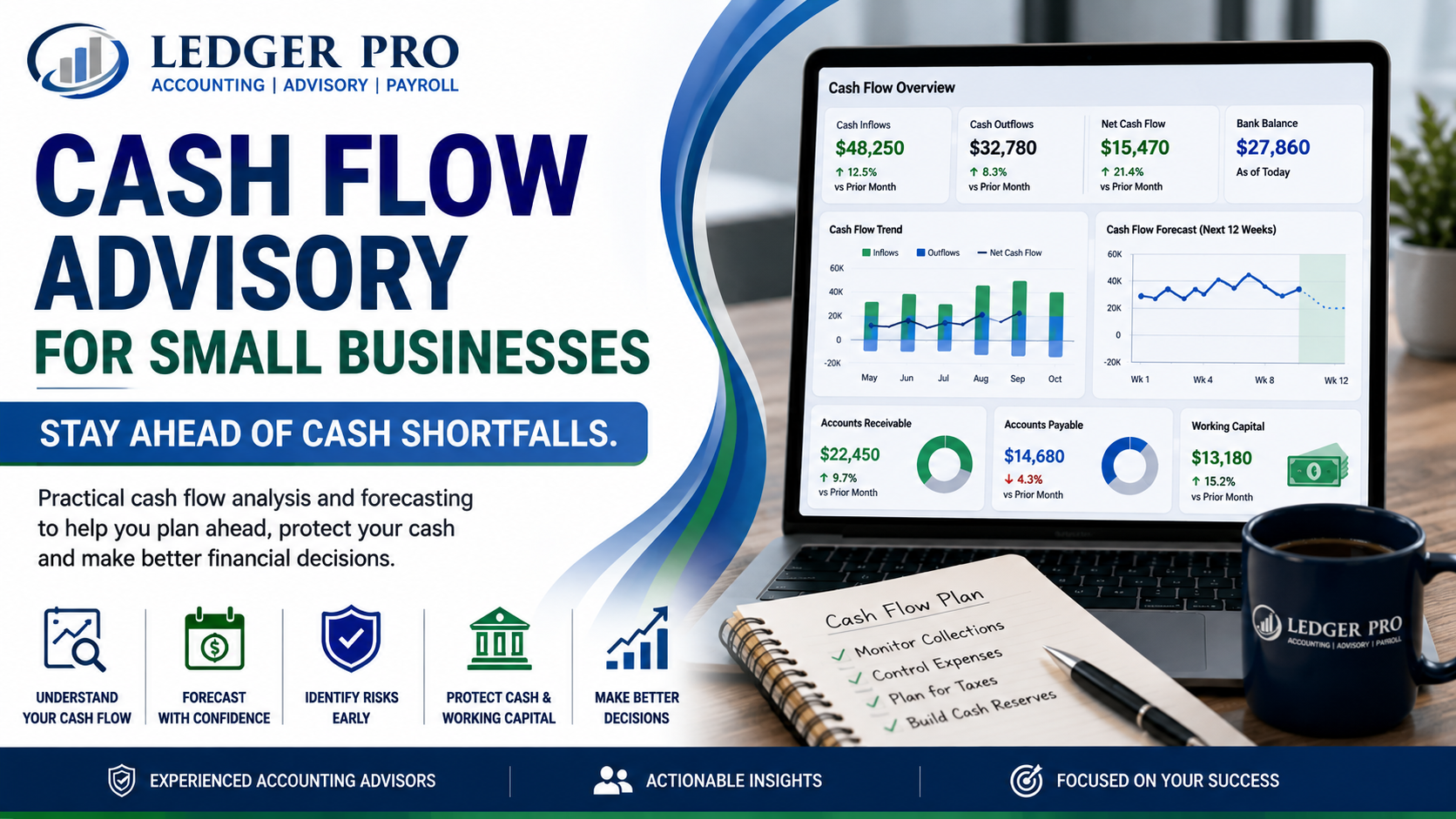
A business can report a profit and still struggle to pay suppliers, payroll, taxes or other obligations on time. Cash flow advisory focuses on when money enters and leaves your business, helping you identify future pressure before it becomes an urgent problem.
Ledger Pro combines accurate accounting records with practical cash flow analysis to help business owners understand their available cash, upcoming commitments and financial options.
What Is Small Business Cash Flow Advisory?
Cash flow management forms part of a broader financial management process. Learn how Ledger Pro small business advisory services help turn accounting information into practical business decisions.
Small business cash flow advisory uses your accounting information to evaluate how cash moves through your business. It goes beyond reviewing the current bank balance by considering expected customer receipts, recurring expenses, debt payments, payroll, taxes and other future obligations.The goal is to identify periods when available cash may become tight and give you enough time to respond.
Why Cash Flow Management Matters
Strong sales do not always produce strong cash flow. Timing differences between revenue, collections and expenses can create financial pressure even when the business appears profitable.
- Identify potential cash shortages before they occur.
- Understand when customer collections need attention.
- Plan for payroll, tax and supplier obligations.
- Evaluate whether spending matches available resources.
- Separate temporary timing issues from underlying financial problems.
- Make financing and investment decisions using better information.
What Should Be Reviewed?
A useful cash flow review brings together information from several parts of your accounting system.
- Current bank and credit card balances.
- Accounts receivable and expected collection dates.
- Accounts payable and supplier due dates.
- Payroll and payroll tax requirements.
- Recurring operating expenses.
- Loan, lease and credit obligations.
- Estimated tax payments.
- Owner distributions or draws.
- Planned purchases and capital expenditures.
- Seasonal or unusual changes in revenue and expenses.
Common Cash Flow Warning Signs
Cash flow problems often develop gradually. Watching the following indicators can give you time to respond.
- Bank balances consistently declining between customer payments.
- Using credit cards or credit lines to fund normal operating expenses.
- Customers taking longer to pay invoices.
- Supplier balances increasing faster than sales.
- Difficulty setting aside funds for payroll or taxes.
- Large withdrawals without corresponding increases in operating cash.
- Unexpected differences between accounting profit and available cash.
How Often Should Cash Flow Be Reviewed?
The appropriate frequency depends on the size of your business, transaction volume and financial pressure.
- Weekly: Useful when cash is tight, collections fluctuate or the business has significant short-term obligations.
- Monthly: Appropriate for many established businesses with predictable activity.
- Quarterly: Useful for broader planning when cash flow is stable.
- Before major decisions: Review cash requirements before hiring, borrowing, purchasing equipment or making large distributions.
Which Ledger Pro Service Level Fits Your Business?
The level of support should reflect the amount of accounting work your business handles internally and the level of financial oversight you need.
- Routine accounting support: Accurate bookkeeping, reconciliations and financial records.
- Accounting plus review: Periodic review of cash balances, receivables, payables and financial performance.
- Advisory support: Cash flow forecasting, scenario analysis, planning and ongoing financial guidance.
View Ledger Pro Plans & Pricing
What You Get With Ledger Pro
- Experienced accounting support.
- Review of reconciled financial information.
- Identification of cash flow pressure points.
- Review of receivables, payables and upcoming obligations.
- Support developing practical cash flow forecasts.
- Financial information explained in terms of business decisions.
Start With Reliable QuickBooks Information
Cash flow analysis is only as reliable as the accounting information behind it. If your QuickBooks Online file contains unreconciled accounts, duplicate transactions, old balances or coding problems, your forecast may start from incorrect information.
Ledger Pro's QuickBooks review process helps identify areas requiring attention before the information is relied upon for management decisions.
View the QBO Client Review Benchmark
Turn Cash Flow Information Into Action
A cash flow forecast should help you decide what to do next. It may show when to accelerate collections, delay discretionary spending, reserve funds for taxes, reconsider distributions or prepare for a temporary financing requirement.
Frequently Asked Questions
What is the difference between profit and cash flow?
Profit measures revenue less expenses under your accounting method. Cash flow measures the timing of money entering and leaving the business. A profitable business may still experience a cash shortage when collections arrive after major obligations are due.
How far ahead should a cash flow forecast look?
The appropriate period depends on your business. A short-term forecast may cover the next several weeks, while management planning may extend several months or longer.
Do I need accounting software to prepare a cash flow forecast?
Reliable accounting software provides a stronger starting point because bank balances, receivables, payables and historical activity are easier to review. Ledger Pro works primarily with QuickBooks Online for this type of analysis.
When should I seek cash flow advisory support?
Consider additional support when cash balances are unpredictable, receivables are increasing, obligations are becoming difficult to manage, borrowing is increasing or you are preparing for a major business decision.