Accounts Receivable Management for Small Businesses: Improve Cash Flow and Get Paid Faster
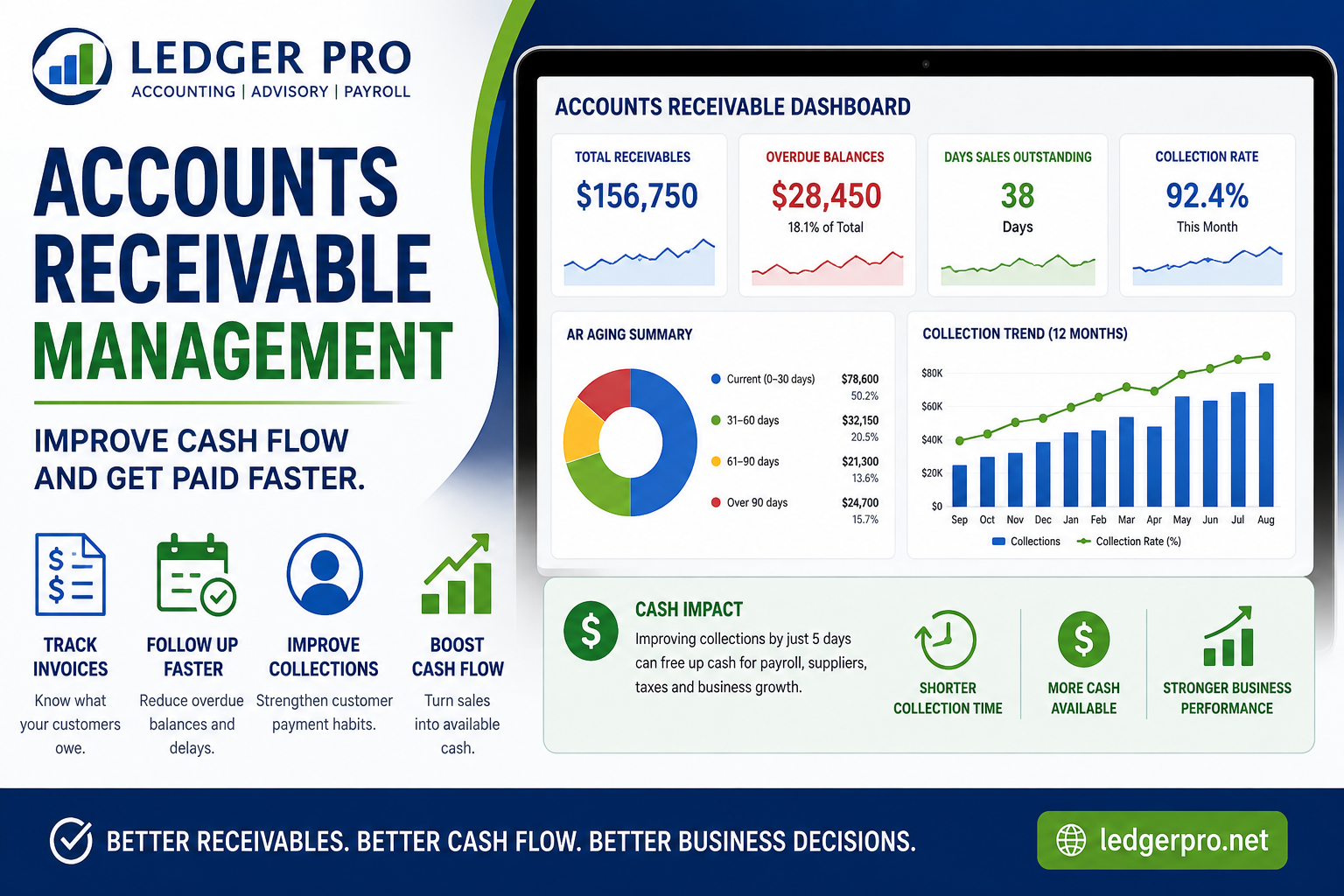
Sales do not improve cash flow until customers pay. Accounts receivable management helps small businesses track outstanding invoices, identify overdue balances and improve the timing of customer collections.
Ledger Pro combines accurate accounting records with practical financial review to help business owners understand receivables, collection trends and the effect unpaid invoices have on working capital.
Revenue is not cash until it is collected.
Regular receivable review helps identify slow-paying customers, overdue invoices and collection issues before they create larger cash flow problems.
What Is Accounts Receivable Management?
Accounts receivable management is the process of monitoring customer invoices from billing through collection. It includes reviewing outstanding balances, payment terms, aging reports, customer payment patterns and overdue accounts.
For broader financial decision support, see
Ledger Pro small business advisory services.
Why Accounts Receivable Management Matters
- Improve the timing of customer collections.
- Identify overdue invoices earlier.
- Reduce the amount of cash tied up in receivables.
- Spot customers with recurring payment delays.
- Support more reliable cash flow forecasting.
- Reduce the risk of old balances becoming uncollectible.
- Improve visibility into working capital.
Review the Accounts Receivable Aging Report
The accounts receivable aging report groups unpaid customer balances according to how long they have been outstanding. It is one of the most useful reports for managing collections.
- Current: Invoices not yet past due.
- 1 to 30 days: Recently overdue balances.
- 31 to 60 days: Balances requiring closer follow-up.
- 61 to 90 days: Higher-risk overdue balances.
- Over 90 days: Old balances requiring immediate review.
Practical tip:
Review the aging report at least monthly. Businesses with high invoice volume or cash pressure may benefit from weekly review.
Watch for Collection Warning Signs
- Total receivables increasing faster than sales.
- More balances moving into older aging categories.
- Customers consistently paying after agreed terms.
- Large invoices remaining unresolved.
- Credit balances or unapplied customer payments.
- Invoices being disputed because of billing errors.
- Old balances remaining on the books without follow-up.
Monitor Customer Payment Trends
The total accounts receivable balance does not tell the whole story. Review how quickly customers are paying and whether collection performance is improving or weakening.
- Average collection period.
- Days sales outstanding.
- Percentage of receivables overdue.
- Largest overdue customer balances.
- Month-over-month aging movement.
- Customer-specific payment patterns.
Accounts Receivable and Cash Flow
Slow collections can create cash pressure even when revenue and profit appear strong. Money tied up in receivables is not available for payroll, suppliers, taxes, debt payments or other operating needs.
For a broader review of cash planning, see
Cash Flow Advisory for Small Businesses.
Include Receivables in Your Monthly Financial Review
Accounts receivable should form part of your regular financial review process. Comparing the current aging report with prior months helps identify whether collection performance is changing.
See
Monthly Financial Review for Small Business
for the broader set of reports and financial indicators to review each month.
Reduce Billing and Collection Problems
Strong receivable management starts before an invoice becomes overdue.
- Issue invoices promptly.
- Use clear payment terms.
- Confirm invoices contain accurate customer information.
- Provide convenient payment options where appropriate.
- Apply customer payments correctly.
- Follow up on overdue balances consistently.
- Resolve billing disputes quickly.
- Review old or uncollectible balances periodically.
Which Ledger Pro Service Level Fits Your Business?
The level of support should reflect how much accounting work your business handles internally and how much receivable oversight you need.
- Routine accounting support: Customer invoicing records, payment posting and reconciled accounting information.
- Accounting plus review: Periodic accounts receivable aging review and collection trend analysis.
- Advisory support: Deeper working capital analysis, cash flow forecasting and management guidance.
View Ledger Pro Plans & Pricing
What You Get With Ledger Pro
- Experienced accounting support.
- Review of customer balances and payment activity.
- Identification of overdue and unusual receivable balances.
- Review of aging trends and collection performance.
- Clear financial information for management decisions.
- Support connecting receivable trends with cash flow planning.
Start With Reliable QuickBooks Information
Accounts receivable reports depend on accurate accounting records. Duplicate invoices, unapplied payments, old balances or incorrect customer activity can distort the aging report and collection information.
Ledger Pro's QuickBooks review process helps identify areas requiring attention before relying on your receivable reports for management decisions.
View the QBO Client Review Benchmark
Turn Receivables Into Cash
The purpose of accounts receivable management is not simply to produce an aging report. The goal is to improve collection visibility, reduce overdue balances and convert completed sales into available cash more consistently.
Need help reviewing your receivables?
Ledger Pro provides remote accounting and advisory support designed around the financial needs of small businesses and organizations.
Contact Ledger Pro
Frequently Asked Questions
How often should accounts receivable be reviewed?
Many businesses benefit from monthly review. Businesses with high invoice volume, tight cash flow or significant overdue balances may need weekly monitoring.
What is an accounts receivable aging report?
An aging report groups unpaid customer invoices based on how long they have been outstanding. It helps identify overdue balances and collection priorities.
Why can sales increase while cash flow gets worse?
Sales recorded on credit increase revenue before the customer pays. If receivables grow faster than collections, reported sales can increase while available cash declines.
What causes inaccurate accounts receivable reports?
Common causes include duplicate invoices, unapplied payments, incorrect customer balances, old transactions and reconciliation problems.