Falling behind on bookkeeping can happen quickly. A few unreconciled months can turn into a backlog of bank transactions, credit card activity, customer payments, vendor bills and financial records that management no longer trusts.
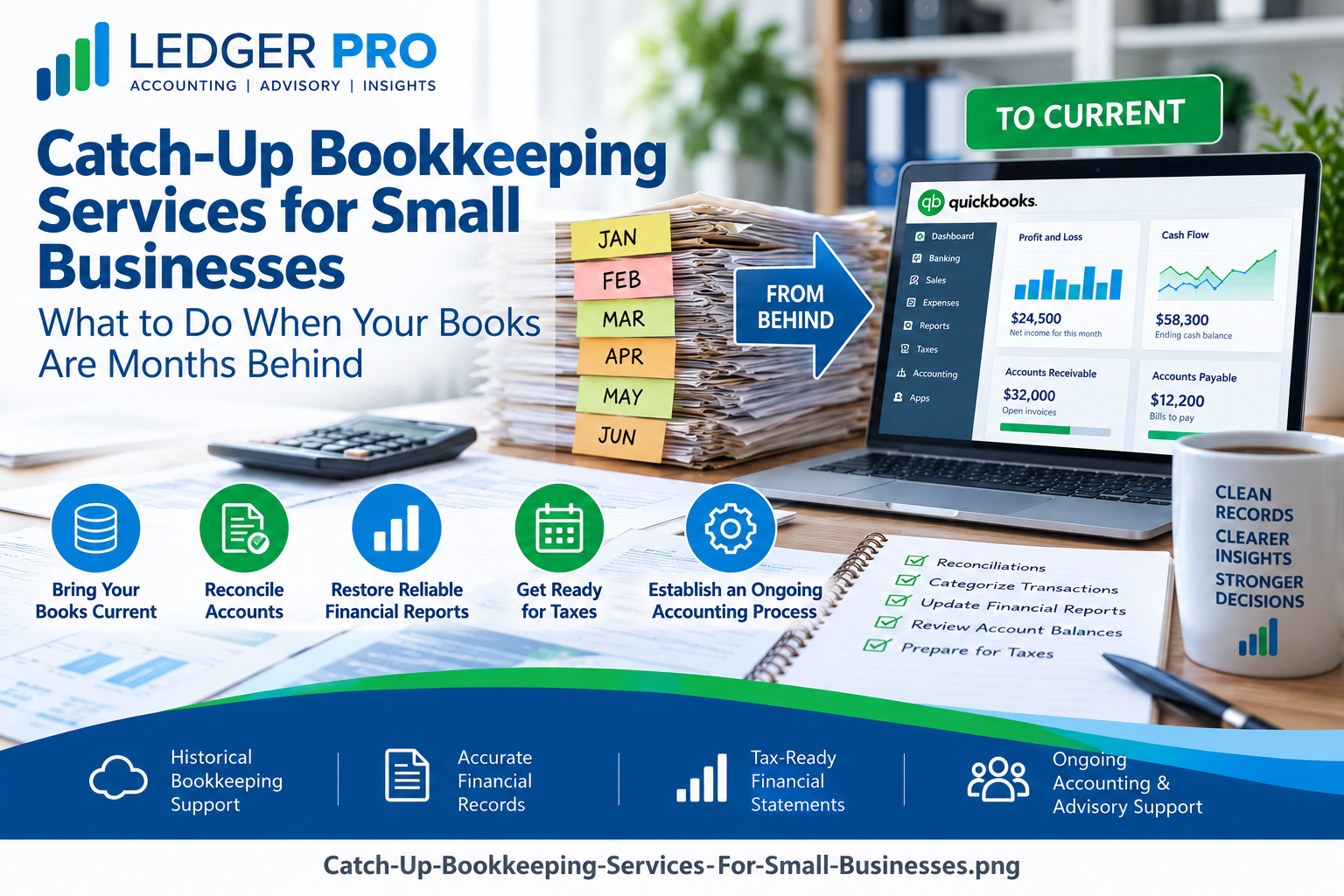
Catch-up bookkeeping services help businesses bring overdue accounting records current by completing missing bookkeeping periods, reconciling accounts, reviewing transactions and restoring financial reports that can be used again.
The objective is not simply to enter months of old transactions. The completed accounting records should reconcile to supporting information and provide a reliable starting point for ongoing accounting, financial reporting and tax preparation.
Catch-up bookkeeping is the process of bringing accounting records from an earlier incomplete period through to the current period.
For example, if the last completed month in QuickBooks Online was March and the business is now in October, the missing accounting activity from April through October may need to be completed before the books are considered current.
Depending on the condition of the records, catch-up work may include:
Outdated accounting records affect much more than bookkeeping. If the records are several months behind, management may not have an accurate picture of the financial position of the business.
Bringing the books current can help restore visibility into:
A bookkeeping backlog is not always obvious from the bank balance. Money may still be coming in and bills may still be getting paid even while the accounting records fall increasingly behind.
Common warning signs include:
Catch-up bookkeeping and QuickBooks cleanup are closely related, but they address different accounting problems.
Catch-up bookkeeping primarily addresses accounting periods that have not yet been completed. Transactions may be missing, accounts may not have been reconciled and financial reports may not be current.
Cleanup work primarily addresses accounting records that already exist but contain errors, reconciliation problems, duplicate transactions, incorrect classifications or unreliable account balances.
If your QuickBooks records are current but you do not trust the balances or financial reports, see our QuickBooks Cleanup Services for Small Businesses guide.
The exact work required depends on how far behind the accounting records are and what information is already available. A structured catch-up process should address the major areas of the accounting system rather than simply entering transactions until QuickBooks appears current.
Bank transactions should be recorded or reviewed and reconciled against the corresponding bank statements for each missing accounting period.
Reconciliation helps identify missing transactions, duplicates, incorrect amounts and other differences between the accounting records and the bank.
Business credit card activity should also be recorded, categorized and reconciled against the statements.
Credit cards that have not been reconciled for several months can accumulate duplicate transactions, uncategorized expenses and incorrect balances.
Transactions should be assigned to appropriate income, expense and balance sheet accounts so the financial statements reflect the underlying business activity appropriately.
Businesses that invoice customers should review outstanding receivables and customer payments to determine whether the accounts receivable balance reflects amounts that are actually still due.
Learn more about managing customer balances in our Accounts Receivable Management for Small Businesses guide.
Vendor bills and payments should be reviewed so accounts payable reflects legitimate outstanding obligations rather than old, duplicated or already-paid balances.
See our Accounts Payable Management for Small Businesses guide for additional information.
Loans, credit cards, receivables, payables and other balance sheet accounts should be reviewed for unusual or unsupported balances.
Catching up transaction activity without reviewing these balances can leave historical accounting problems unresolved.
Catch-up work becomes much more efficient when the supporting financial information is organized and available.
Depending on the business, the information required may include:
A business may be one month behind, several months behind or, in more difficult situations, have accounting periods from prior years that remain incomplete.
The further behind the records are, the more important it becomes to establish a systematic process. Historical periods should generally be completed in chronological order so that opening and closing balances flow correctly from one accounting period to the next.
There is no single timeframe because the amount of work depends on the condition and complexity of the accounting records.
Factors that can affect the time required include:
Reviewing the existing accounting file before estimating the project can help determine the extent of the backlog and identify problems that may affect the scope of work.
One of the most common reasons businesses need catch-up bookkeeping is an approaching tax deadline.
Tax preparation depends on accounting information. If several months of business activity are missing or accounts have not been reconciled, the financial information used for tax preparation may be incomplete.
Catch-up bookkeeping can help bring the accounting records through the required period so the business has more organized financial information available for tax preparation.
Once the missing accounting periods have been completed and the major accounts reconciled, the business can begin reviewing current financial statements again.
Depending on the accounting system and business, these may include:
Current reports can then become part of a regular monthly financial review rather than documents that are only examined at tax time.
A bookkeeping backlog can leave management operating with incomplete information. Once the records are current, financial information can again be used to evaluate how the business is performing.
Management can begin reviewing areas such as:
For businesses that need more interpretation of their financial results, our Management Reporting for Small Businesses guide explains how accounting reports can be developed into more useful management information.
Before beginning a catch-up project, it is useful to determine exactly where the accounting records stopped being complete and whether earlier periods contain problems that also require attention.
A structured review can help identify:
Ledger Pro's QBO Client Review Benchmark provides additional guidance on areas that can be reviewed when evaluating QuickBooks Online accounting records.
Completing a catch-up project solves the immediate backlog, but the next objective should be preventing the accounting records from falling behind again.
That usually requires establishing a recurring accounting process with clear responsibilities and deadlines.
If bookkeeping fell behind because the owner or internal staff did not have enough time to maintain the accounting records, returning to the same process may eventually create another backlog.
Ongoing outsourced accounting can provide a structured alternative for businesses that need regular accounting and financial reporting without building a complete internal accounting department.
Learn more in our Outsourced Accounting Services for Small Businesses guide.
Ledger Pro can help businesses evaluate overdue QuickBooks Online records, identify the accounting periods requiring attention and establish a structured path toward bringing the books current.
Depending on the condition of the records and scope of the engagement, support may include:
The appropriate service depends on how far behind the books are, the volume of transactions, the condition of the existing records and whether cleanup work is also required.
After the records are brought current, the business may also benefit from ongoing accounting, financial review or advisory support.
Review Ledger Pro Plans & Pricing to explore available service options.
If your bookkeeping is several months behind, financial reports are outdated or a tax deadline is approaching, the first step is determining exactly where the accounting records stand and how much work is required to bring them current.
Ledger Pro can review your QuickBooks Online records and discuss the appropriate next steps for catch-up bookkeeping, cleanup and ongoing accounting support.
Book a Consultation Contact Ledger Pro
Catch-up bookkeeping is the process of completing overdue accounting periods so a business's financial records are brought from an earlier incomplete period through to the current period. It can include transaction review, categorization, account reconciliations and updating financial reports.
Catch-up bookkeeping primarily addresses accounting periods that have not been completed. Cleanup bookkeeping addresses records that already exist but contain errors, incorrect balances, duplicate transactions, reconciliation problems or other issues. Some businesses require both services.
Catch-up bookkeeping can help bring missing accounting periods current and organize the financial records needed for tax preparation. Additional corrections or tax-specific information may still be required depending on the condition of the records and the business's filing requirements.
Once the records are current, the business should establish a recurring accounting process that includes regular transaction review, monthly reconciliations and financial reporting. This can help prevent another backlog and provide management with more timely financial information.