
Working Capital Management for Small Businesses: Strengthen Liquidity and Support Operations
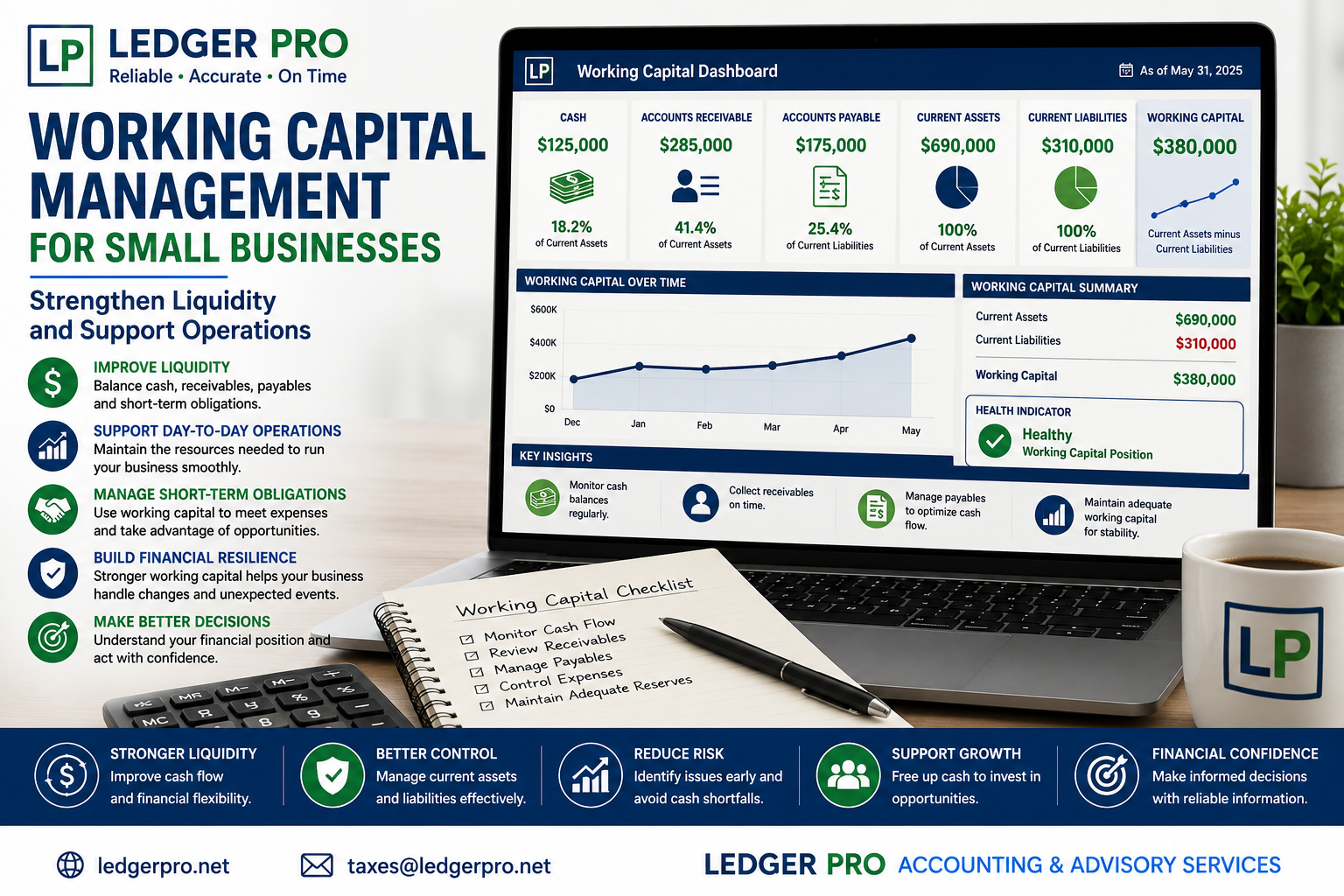
Working capital helps determine whether a business has enough short-term resources to meet its day-to-day obligations. It connects cash, receivables, payables and other current assets and liabilities into one practical measure of liquidity.
Strong working capital management helps business owners maintain financial flexibility, support operations and prepare for short-term cash requirements.
What Is Working Capital?
Working capital is generally calculated as current assets minus current liabilities. Current assets commonly include cash, accounts receivable and inventory. Current liabilities include accounts payable and other obligations due within the short term.
Positive working capital means current assets exceed current liabilities. The amount required depends on the size, operating cycle and financial needs of the business.
For broader financial decision support, see Ledger Pro Small Business Advisory Services .
Why Working Capital Management Matters
- Support daily operations. Maintain resources needed for payroll, vendors and operating expenses.
- Protect liquidity. Reduce the risk of short-term cash shortages.
- Manage receivables. Improve the timing of customer collections.
- Manage payables. Coordinate vendor payments with available cash.
- Support growth. Preserve financial capacity for new opportunities.
- Improve resilience. Maintain flexibility when business conditions change.
What Should Be Reviewed?
- Cash and bank balances
- Accounts receivable
- Accounts receivable aging
- Inventory, where applicable
- Prepaid expenses and other current assets
- Accounts payable
- Accounts payable aging
- Payroll liabilities
- Taxes payable
- Short-term debt obligations
- Other current liabilities
Monitor Cash Availability
Cash is the most liquid component of working capital. Business owners should monitor available bank balances together with upcoming payroll, vendor, tax and debt obligations.
A strong working capital position does not necessarily mean all resources are immediately available as cash. Receivables and inventory may take time to convert.
Read the Cash Flow Advisory Guide
Improve Accounts Receivable
Slow customer collections can weaken working capital even when reported revenue remains strong. Review overdue invoices, customer payment trends and the timing of expected collections.
Read the Accounts Receivable Guide
Manage Accounts Payable Carefully
Vendor payment timing also affects working capital. Paying obligations too early can reduce available cash, while paying too late may result in fees or damaged supplier relationships.
Read the Accounts Payable Guide
Working Capital Warning Signs
- Cash balances declining over several months.
- Accounts receivable increasing faster than sales.
- Customers taking longer to pay.
- Vendor balances becoming increasingly overdue.
- Frequent reliance on credit cards or short-term borrowing.
- Difficulty meeting payroll, taxes or recurring expenses.
- Inventory increasing without corresponding sales growth.
- Current liabilities increasing faster than current assets.
Control Expenses and Preserve Working Capital
Operating expenses consume working capital. Reviewing recurring costs, vendor pricing and unnecessary spending helps preserve cash for essential obligations and business priorities.
Read the Expense Management Guide
Connect Working Capital With Profitability
Profitability and working capital measure different aspects of financial health. Profitability shows whether revenue exceeds expenses. Working capital focuses on the short-term resources available to meet obligations.
Read the Profitability Analysis Guide
Use Budget vs Actual Analysis
Budget comparisons help identify whether revenue, expenses and cash requirements are developing differently from expectations. Significant variances can indicate future pressure on working capital.
Read the Budget vs Actual Analysis Guide
Forecast Future Working Capital Needs
Financial forecasting helps estimate future cash balances, customer collections, vendor payments and operating expenses. This gives management more time to prepare for periods when liquidity may tighten.
Read the Financial Forecasting Guide
How Often Should Working Capital Be Reviewed?
- Weekly: Useful for businesses with tight cash flow or frequent customer and vendor activity.
- Monthly: Review cash, receivables, payables and current liabilities as part of the financial close.
- Quarterly: Evaluate broader trends in liquidity and working capital requirements.
- Before major decisions: Review working capital before significant hiring, purchases or distributions.
Use Your Monthly Financial Review
Working capital should be reviewed alongside profitability, cash flow, receivables, payables and operating expenses. Together, these measures provide a clearer picture of short-term financial health.
Read the Monthly Financial Review Guide
Which Ledger Pro Plan Fits Your Business?
- Essential: Appropriate for businesses primarily requiring accurate bookkeeping and reconciled financial records.
- Growth: Suitable for businesses needing regular financial review and improved visibility into cash, receivables and payables.
- Premium: Designed for businesses requiring deeper working capital analysis, forecasting and ongoing advisory support.
View Ledger Pro Plans & Pricing
What You Get With Ledger Pro
- Experienced accounting and financial review support
- Review of cash balances and short-term obligations
- Accounts receivable and payable analysis
- Working capital trend review
- Cash flow and financial forecasting support
- Financial information explained in practical business terms
Strengthen Your Short-Term Financial Position
Working capital management helps business owners understand whether short-term resources are sufficient to support operations and meet upcoming obligations.
Frequently Asked Questions
What is working capital?
Working capital is generally calculated by subtracting current liabilities from current assets. It provides an indication of the short-term financial resources available to support operations.
What is positive working capital?
Positive working capital means current assets exceed current liabilities. The appropriate level varies depending on the business and its operating requirements.
Why can a profitable business have working capital problems?
Profit can exist while cash remains tied up in receivables, inventory or other assets. Payment timing can therefore create liquidity pressure even when the business reports a profit.
How can a small business improve working capital?
Common approaches include improving collections, managing vendor payment timing, controlling expenses, maintaining adequate cash reserves and forecasting future financial requirements.
Start With Reliable QuickBooks Information
Working capital analysis depends on accurate balance-sheet information. Unreconciled accounts, old receivable or payable balances and incorrect classifications can distort current assets and current liabilities.